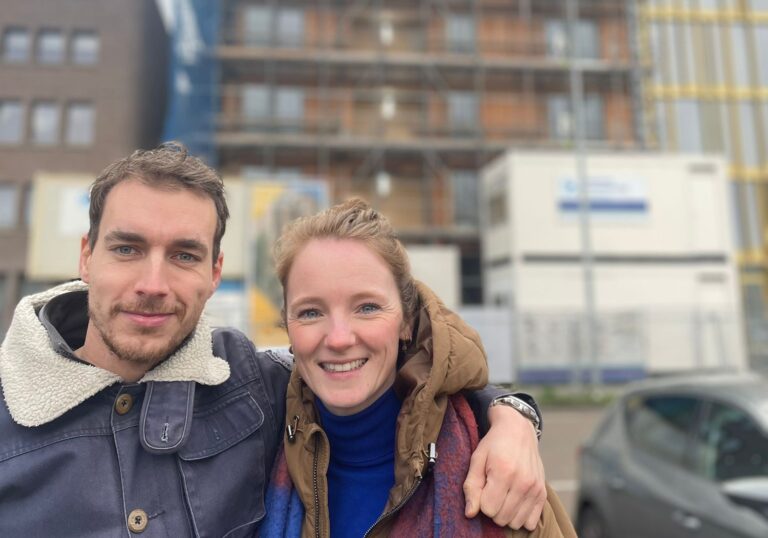

When Julian (3D artist and coffee lover, 31) and Anna (scientist and green enthusiast, 29), both originally from Germany, moved their plants, they didn't expect much. They had already tried in their previous apartment in Amsterdam-Noord—a tall, concrete apartment building on the NDSM shipyard. But no matter how well they cared for them, new leaves failed to appear. Some plants simply didn't make it.
Now, after moving to Timber House, things look completely different. "They've exploded," Anna says with a laugh. "For the first time in a year and a half, new leaves have grown." The air in the house feels different, the light is softer, the space seems to breathe. The humidifier they needed before was immediately discarded. Their plants perhaps tell the story of their new home better than they themselves can.
From concrete to wood
Julian and Anna have been living in Timber House since November 2024. It is their second home in Amsterdam. Their first apartment was also in Noord, high above the city. "It was fine to live there," says Julian, "but it never really felt like home. More like an Airbnb."
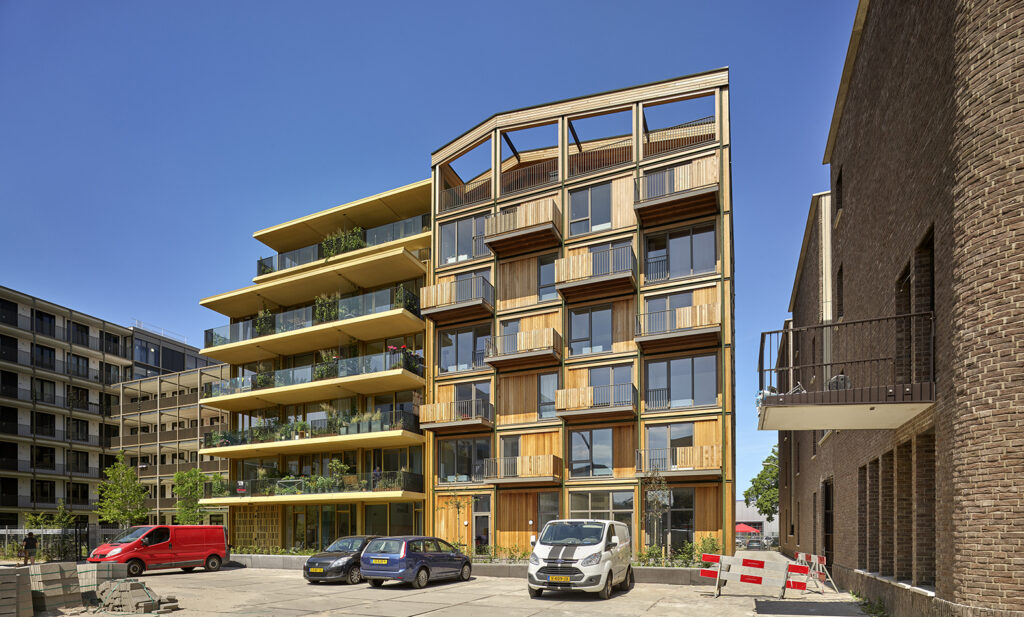
They wanted to stay in Noord, but were looking for something smaller. More peace and quiet, more greenery, a place with character. Timber House immediately felt different: an intimate building, not a towering apartment block, with a clear focus on design and architecture. "And wood," says Anna. "That immediately appealed to me."
The choice of a wooden building was a conscious one for her. She is interested in architecture and materials, and the wooden facade and exposed wooden construction gave the building something special. For Julian, it was something new. "You don't see this very often in Amsterdam yet. That made me curious."
A house you can smell, hear, and feel
It is difficult to sum up in a single word what living in wood means to them. First and foremost, it is the smell. "When I come home, I smell the wood," says Julian. "A light pine scent. It immediately gives me a feeling of warmth."
The house continues to surprise visually as well. The grain, patterns, and color nuances constantly draw attention. "I can really keep looking at it," says Anna. "The house changes with the light, with the seasons."
The wood is not only construction, but also a design feature in their interior. Julian and Anna deliberately matched their furniture and colors to the material. "The wood gives our home so much atmosphere," says Anna, "we have created a harmonious whole with our personal furniture and belongings."

Coming home to nature all around you
What Julian and Anna are experiencing is consistent with biophilic design. It’s all about the connection between people and nature in the built environment. Think of natural materials, natural light, views of greenery, and a comfortable indoor climate. In Timber House, all of this comes together naturally. The wood provides warmth and character, while the greenery surrounding the building and their own plants bring the outdoors inside. “It feels peaceful here,” says Anna. “As if it’s easier to unwind when you come home.”
Plants as indicators
They may notice the pleasant indoor climate most in their plants. In their previous home, the air was extremely dry due to the ventilation system. "The temperature was always 24 degrees inside," says Julian. "That was disastrous." In Timber House, the humidity is better balanced. The house regulates moisture in a natural way. The plants are visibly recovering—confirming what Julian and Anna experience every day: the house feels healthier.
Silence, sound, and memories
Acoustically, it's also a different kind of living. When they first moved in, they immediately noticed that there was no echo in the empty house. The wood dampens sound and makes it softer. Sometimes they hear the house 'working', a slight creak here, a tap there. "I actually like that," says Julian. "It reminds me of my childhood in Germany. It feels familiar."

More conscious living
Sustainability was already important to Julian and Anna before they moved here. But Timber House made them even more curious. It was only when they received a flyer from Finch Buildings asking if their home could be used as a showcase that they really delved into the background of the building. "Who built this? How is it constructed?" says Anna. "It's strange that this wasn't mentioned more explicitly in the property advertisement. For us, it's a real plus."
Another amusing anecdote: friends who are architects recently looked at things with different eyes during a dinner party. Between courses, they discussed the structure of the building and eventually started searching for where one module ended and another began.

A place to stay
Timber House feels like a safe haven for Julian and Anna. It's a place where they enjoy spending time, where they can relax and be themselves. "This isn't just some anonymous rental property," says Julian. "This is truly our home."
Will they live here for a long time? They hope so. Maybe one day they will move to a slightly larger home, with a few extra square meters. But they don't want to lose the feeling they have found here—warmth, tranquility, character. And their plants? They would rather stay here too.