
In discussions about sustainability, people sometimes jump to a simplistic conclusion: the more wood a building contains, the more sustainable it is. After all, more wood means more CO₂ storage. But it’s not that simple. If you want to measure a building’s actual climate impact, you shouldn’t just look at how much CO₂ it stores, but rather at how much emissions are actually prevented.
More wood means greater CO₂ storage …
In comparisons such as the 2026 Housing Concepts Brochure, multiple indicators are evaluated side by side, including CO₂ emissions, energy efficiency, and CO₂ storage. In the case of the latter indicator, mass is rewarded. A building with a high timber mass automatically scores higher on storage, whereas the total environmental impact may actually be greater for a smartly designed building that achieves the same performance with fewer materials.
… but using less material is actually more sustainable
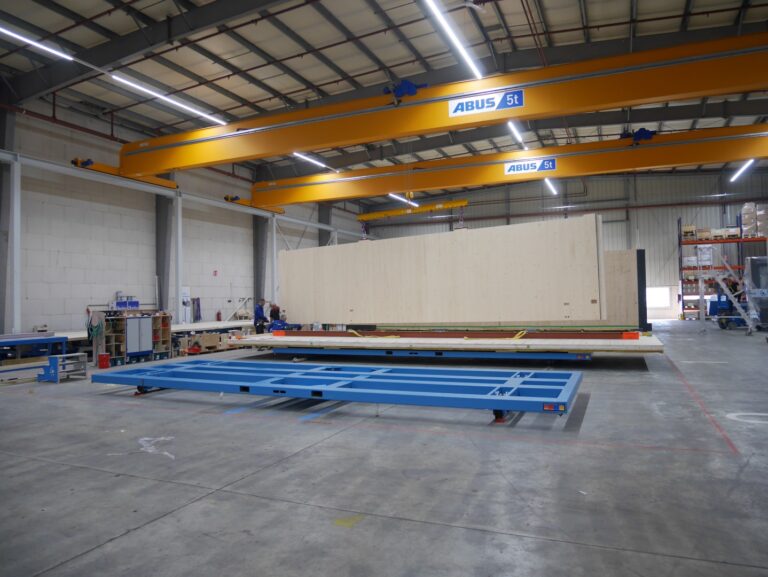
In the Housing Concepts Brochure, Finch Buildings scores the lowest among all compared concepts in terms of material-related CO₂ emissions per square meter. We are also among the top-performing systems in terms of MPG. This is because our building system was developed using an efficient timber construction: we use exactly the right amount of material to achieve the desired structural performance, without over-engineering.
This efficient timber construction means less CO₂ stored in the building, but also less material extraction, less transportation, and fewer production emissions. On balance, our concept therefore has the lowest total material-related emissions.
Smart and cost-effective implementation—that’s where the real value lies
Wood is a valuable bio-based raw material. It must be used wisely and sparingly. In our view, the best timber construction is not the one with the most mass, but the one with the lowest overall environmental impact.
Ultimately, sustainability is mainly about what you can prevent, not just what you store.