Project Pasteur is a large-scale modular timber construction project in Haarlem, developed in collaboration with Elan Wonen, HBB Groep, and FARO. The project comprises 179 homes, 158 of which are constructed from solid timber. A total of 322 Finch modules are being used. This makes Project Pasteur a leading example of how modular timber construction at the neighborhood level can contribute to both accelerating housing production and reducing CO₂emissions in construction. Not an experiment, but proven practice on a large scale.
Location: Haarlem
Client: Elan Living Architect: FARO Contractor: HBB Group Factory: Size Feeling Home Collaboration: Bronze Constructors & Engineers, Aveco de Bondt, Peutz
Total number of homes: 179 Number of wooden houses: 158 Number of modules: 322
Sector: housing (social housing and mid-range rental housing) Size of dwellings (GO): 46–73 m² Accessibility: corridor and gallery
Subsidies: MIA / Vamil Stored CO2: 2,400 tons
Status: under construction (completion from Q2 2026)
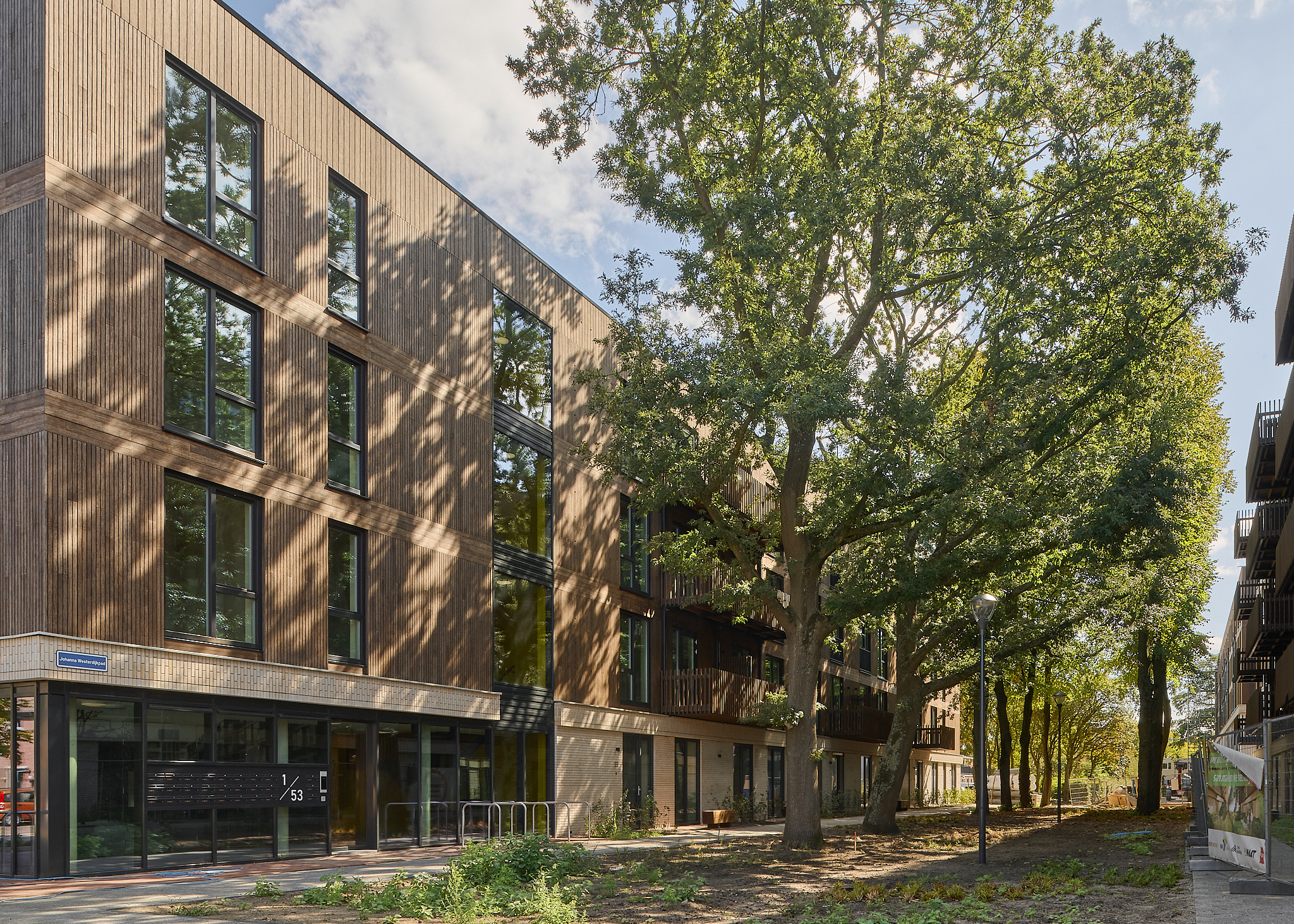
Project Pasteur is located in the Boerhaavewijk, a post-war neighborhood that is currently being developed into a future-proof residential environment. In this project, 84 outdated social housing units are being replaced by 179 new homes (155 social housing and 24 mid-priced rentals). The task goes beyond mere densification; the project contributes to a future-proof neighborhood in which affordability, quality of life, and sustainability come together. Existing green structures, including the walking path lined with mature trees, will be preserved.
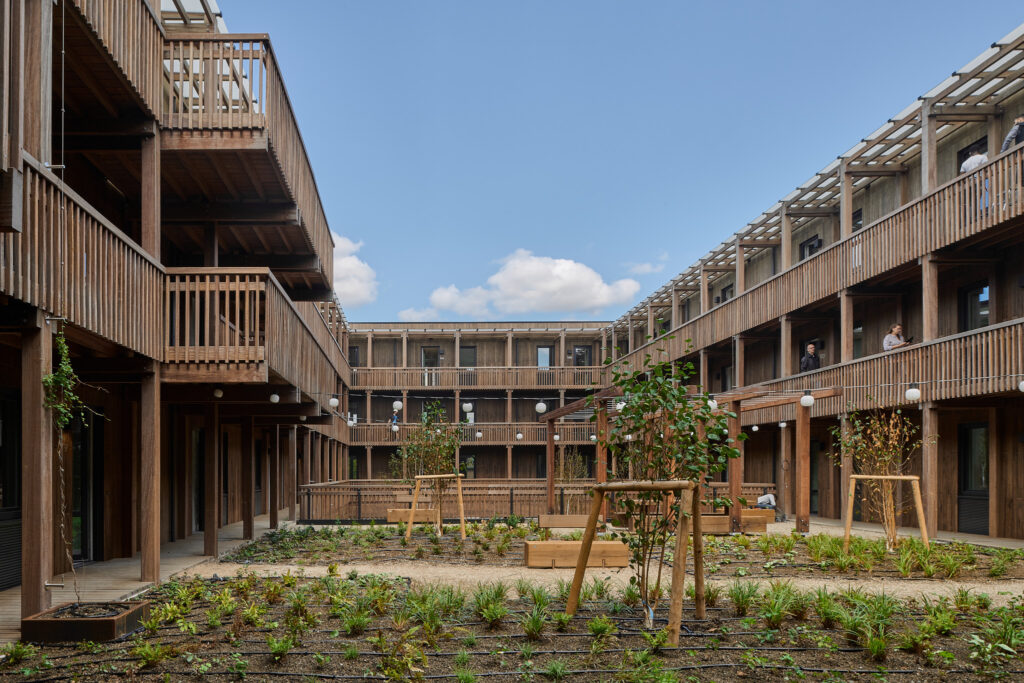
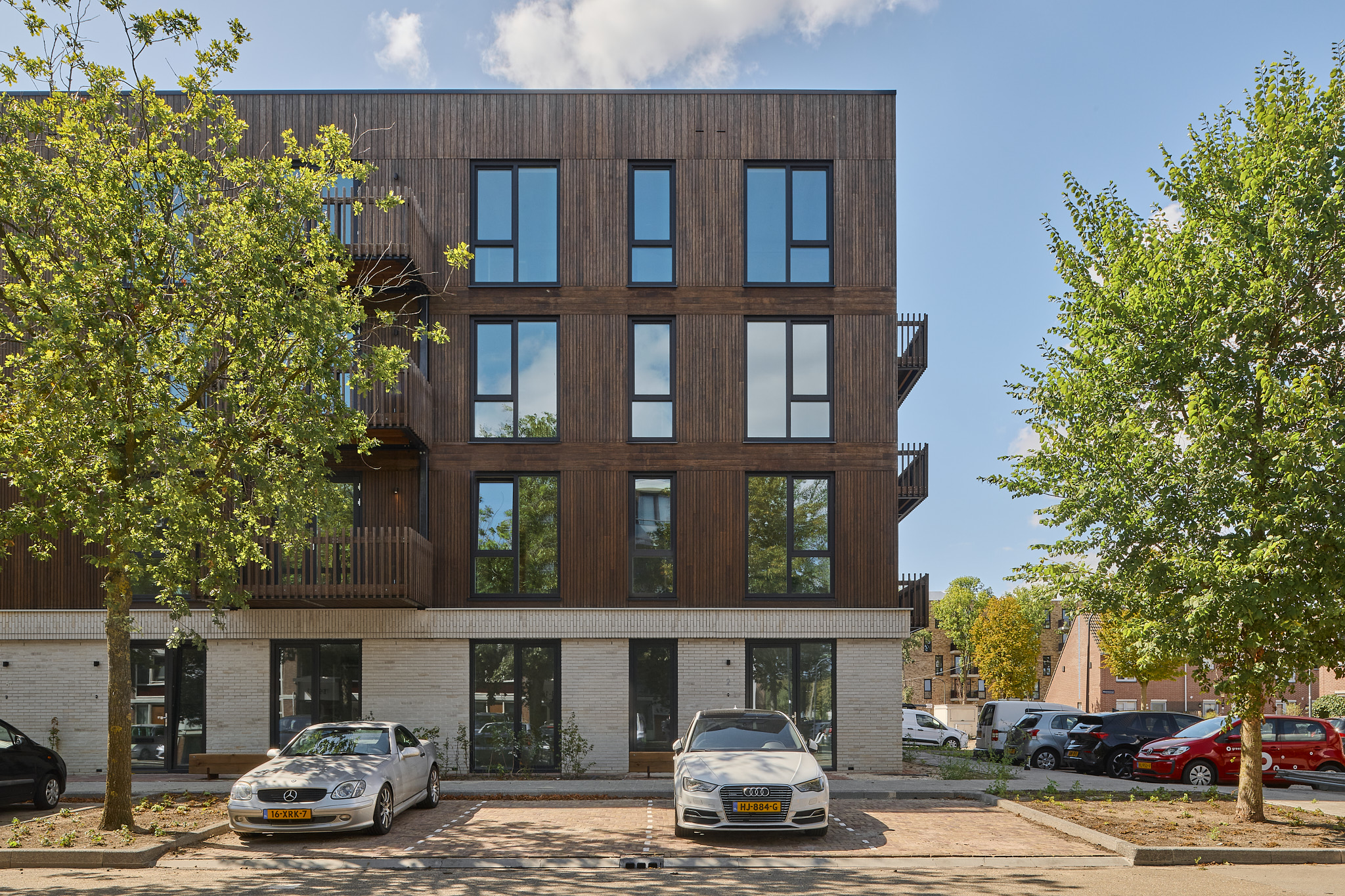
The project consists of three residential blocks, one of which also houses the Elan Wonen office and showroom. Two buildings are designed according to the corridor typology; the third building is square in shape and offers space for parking spaces and a communal courtyard garden. The three volumes have a uniform design but vary in height. This ties in with the clear layout that characterizes the post-war urban development of the Boerhaave neighborhood. The residential blocks will have a bamboo facade and a masonry plinth.
Block A has five floors and accommodates 62 apartments. Block B is located in line with block A. This building also has five floors and accommodates 53 apartments. The third block consists of four floors and has a square shape with 64 apartments.
Modular timber construction The homes consist of factory-produced solid wood modules, which are connected and stacked on the construction site. The modular design of the project is not leading in the architectural image, but it is noticeable in the living comfort.
In addition, this modular construction method makes it possible to:
significantly reduce construction time
achieving consistently high quality through production under controlled conditions
minimizing the inconvenience to the surrounding area during construction
Sustainability and circularity Project Pasteur contributes to reducing the environmental impact of the built environment. By building with solid wood, CO₂ is stored in the construction for a long time. In addition, factory production ensures that CO₂ emissions during the construction phase are significantly lower than with traditional construction methods.
The construction process is also focused on sustainability:
prefabricated production minimizes construction waste
A shorter construction period reduces transport and emission movements.
The modular design allows for future modifications, reuse, or disassembly.