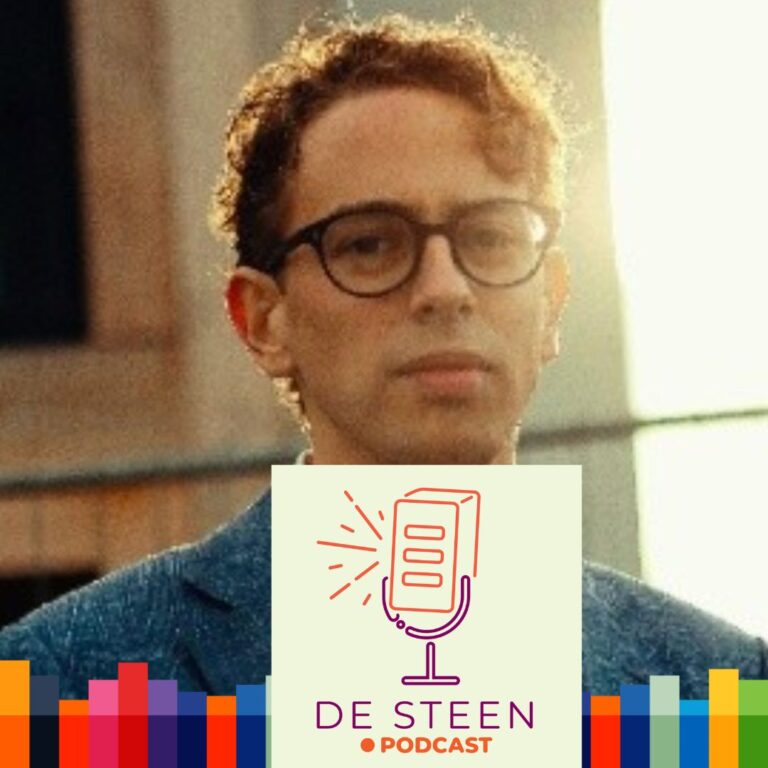
Industrial construction? Modular construction? Jurrian Clamp, founder of Finch Buildings—I prefer to call it modern construction. In the podcast *De Steen* he joined Wouter Truffino, centerin biobased BLOK Pavilion, during Dutch Design Week 2026 in Eindhoven. The conversation was mainly about money, because that's where the decision is made.
Wood construction? It’s just a default weighting
Twelve years ago, building with wood was still an unusual choice. Now, wood is considered for every project. And that’s how it should be, Jurrian believes. We have no other choice: there aren’t enough workers, the nitrogen problem hasn’t been solved, and the climate challenge won’t wait.
The solutions are there. Nthe business case yet
Wood Construction make it scalable, starts with a different approach to allocating funds. Jurrian advocates for spreadsheets to take into account what is currently out of view. Take social value: living and working in Wood has an effect on the well-being of people. Or as Jurrian puts it: “Which little Excel cell does that actually say?” Calculate ook the CO2 the energy stored in the wood, and the time you save on construction and development by using a proven timber-frame system.
Suddenly, the numbers look different. Your capital turns over faster, you pay less interest, and your homes are occupied sooner. And if you build faster, you can handle more projects at the same time. Jurrian calls it the chess clock. His message to clients: “Even if you factor in just 5% of the benefit, we’ll all make the same choice.”
And let's stop with pilot projects. What we need are focus projects and partnerships in which the client and the system scale up together.
And the government? Focus on CO2!
The Hague can also lend a hand. Currently, an efficient timber-frame construction system in the MPG is penalized for its concrete foundation. And sustainable innovators have a harder time than their polluting competitors. It should be the other way around.
Jurrian's proposal is simple: focus on CO2-emissions per square meter and eliminate the sales tax on materials that fall below a pollution threshold.
Listen to the episode
Listen Here The entire episode of *De Steen*.
Podcast "De Steen" is made possible in part by REBF.