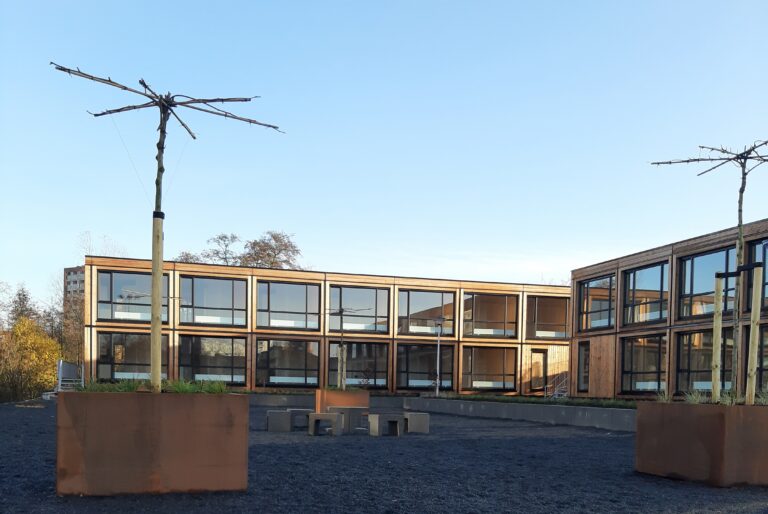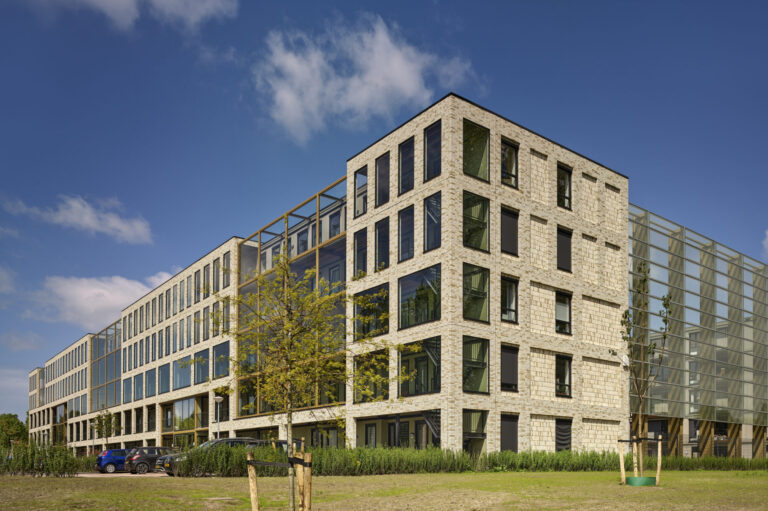

Together with LEVS architects, Prosper Vitae, TU Delft, and the municipality of Amstelveen, Finch Buildings contributed to the publication. Building Sustainable Neighborhoods – Case study analysis on the CO₂ impact of various construction methods in urban area development Nieuw-Legmeer.
The study explores how biobased construction methods, including Finch Buildings' modular 3D timber construction system, can contribute to making large-scale housing projects more sustainable.
Comparison between traditional and biobased construction
The study analyzes three construction scenarios for a residential building in the new Nieuw-Legmeer neighborhood (Amstelveen):
1. Traditional concrete construction
2. Concrete and 3D wood modules from Finch Buildings
3. Complete timber construction: 2D and 3D timber systems
The results show that timber construction delivers significant CO₂ reductions compared to concrete structures. In particular, the use of prefab 3D modules accelerates the development and construction process, reduces disruption during construction, and makes the process more predictable and cleaner.
3D wood modules as an accelerator of the construction transition
The study shows that the use of Finch modules can reduce construction time by approximately 50%, cut development time by a third, and speed up the permitting process thanks to the certified building system.
In addition, the modules offer advantages in terms of transport, emissions, and construction quality, while the CO₂ storage capacity of wood makes a direct contribution to municipalities' climate goals.
Thanks to Built by Nature for making this valuable research possible.
Want to know more? Read the white paper on the LEVS website via the button below:
Want to stay up to date on all the developments at Finch Buildings? Then sign up for our newsletter.